Character
On 05-08-1997, when I arrived in Europe as a refugee, the most painful question for me was this: “Which country have you come from?”
I said: “I am from Kurdistan.”
They said to me: “Kurdistan is not on the map!”
I had to explain the name of my region, with all the knowledge and information connected to that region. But the person asking me simply wrote down the name of the state that the region I came from belonged to, and next to the name of that state opened a bracket and wrote in it: “Kurd” — as if the language I spoke were the only sign of my identity.
To put it more clearly, I had not been able to define myself well. In that very moment this belief sprouted in my mind: whoever does not know himself cannot define himself freely.
I was unaware that the rulers of that country, before I even existed, had defined me to the world according to their own interests; their word had become official and been accepted as truth, while my truth had become a matter of doubt.
Knowing oneself
That is why knowing oneself is not only being aware of one’s own existence. It is bound up with history, language, culture, geography, memory and the right to define oneself. But, a thousand times sadly, ever since the fall of the Sasanian state, the language, history, culture, geography and memories of our homeland have been, and still are being, laid waste, and have been left without a state and without an owner. As our ancestors said: Property without an owner is food for the wolves.
That is on one side. On the other side, life is moving forward and changing so fast that we are left confused and bewildered in the middle of it. We cannot properly weigh up these rapid developments, because the values that were very precious in our minds thirty years ago have lost value in today’s life and are heading towards losing still more; the beliefs that were sacred in our society thirty years ago have not stayed as they were; many of our ways of behaving from thirty years ago are of no use in today’s life… and so on. In short, and in plain words, it is like this saying of our ancestors: The rose was wet, then rain fell on it, and it was soaked through.
Western observers
Despite these historical truths — that the alphabet of our language was annihilated (genocided) in our homeland, that our writings and books were subjected to Anfal, that the withering of the veins of our culture was set in motion, that the names of our grasses, plants and flowers were plundered, that they put their own language in our mouths, and that they kept the Kurdish language and culture away from official status — and on top of all these acts carried out against our humanity and our civilisation, we still have many Western observers who praise the Kurdish character. For example:
- the Italian orientalist Pietro Della Valle, who passed through the lands of the Kurds in 1617 and wrote about them in Viaggi;
- the English orientalist Claudius James Rich, who stayed in Kurdistan in 1820 and wrote about them in Narrative of a Residence in Koordistan (1836);
- and the British traveller Isabella Lucy Bird Bishop, who saw them in 1890 and wrote about them in Journeys in Persia and Kurdistan (1891).
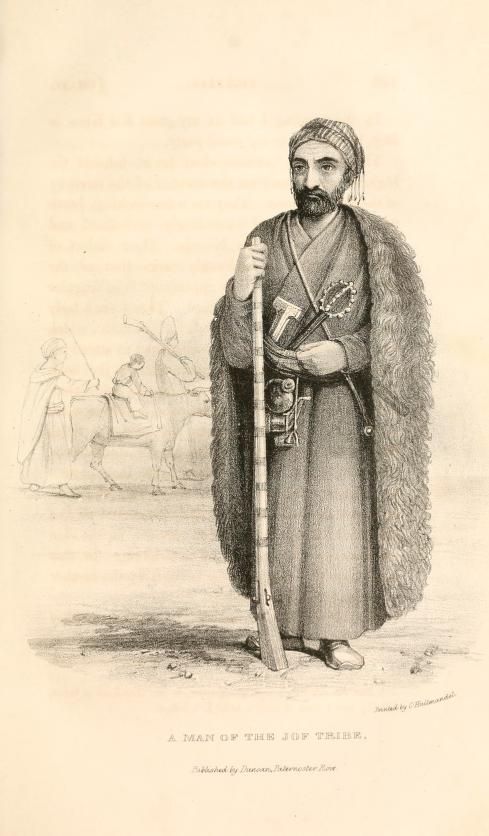
A great truth comes to light in their books: until the beginning of the twentieth century, the Kurdish character in the Middle East was distinct and strong, especially that of Kurdish women, and this was before the founding of the nation states.
One of the paradoxes of the subjugation of Kurdistan is that those who occupied our homeland were themselves weak and deeply lacking in language and culture. Unlike the English, the Spanish and the Portuguese, who had developed, rich and complete languages and easily spread their language among the peoples of every country they occupied, in Kurdistan this did not happen!! As soon as they reached the soil of Kurdistan, they began, and still continue, to plunder Kurdish language, music, science and culture, and also those of the ancient peoples of the region. This can be seen in the threshing floors of the Persian, Turkish and Arabic languages, which contain a noticeable share of words from Kurdish, Aramaic, Armenian, Greek … and other languages.
Two wars at once
To shed light on the strategic framework and the mechanisms of the subjugation of the Kurdish language and culture, I will dwell on the findings of a study by the Nûbar Kurdish Center for Strategic Studies.
In every historical stage that societies and peoples pass through, two wars are fought at the same time, side by side. One is an open war that takes place on physical ground; the other is a symbolic war of ideas that is fought in people’s minds and is more dangerous than the first. The outcome of the first war is decided by military force, economic resources and political alliances, but the second war is settled by language, image and storytelling (narrative).
That is why, in many cases, the aim is no longer only the political defeat of the opponent. The aim is to plant a negative, murky and very confused image of the opposing side in the public mind. As a result, merely saying his name becomes in itself a reason for rejection, before there is any chance to weigh his ideas, positions and views.
In the fifth part I will talk about that war of ideas and its effect on the erasing and changing of names, and on the character, positions, outlook and decision-making of the Kurdish people in this struggle.