Veering
The word “varîbûn” is made up of two parts: “varî”, which means turning off the road and corresponds to the English word “veer”, and “-bûn”, which is the verb of this action. Besides this, it has several other senses in the Kurdish language. The roads and paths of life are many, and veering happens on all of them if things do not stay on their right course.
Since our subject is the importance of names, I will make every effort to shed light on the causes of the phenomenon of the formation of names and surnames in the societies of the Middle East in general and of Kurdistan in particular, in order to illuminate the state and the causes of veering in Kurdish names.
I do not believe anyone would argue against the statement that 1,400 years ago there was not a single person named Mihemed or Omer in any of the four corners of Kurdistan. A while ago I saw that in a school for the blind in the small town of Şaweyis near Hewlêr (this is on the word of Rûdaw TV), in a class of twenty-six people, thirteen of the pupils in that class were named Mihemed. From this, the direction and the extent of the veering in Kurdish names become plain and visible to us.
The campaigns of occupation
Of course, the shaping of this direction of veering is one of the results of all those various campaigns (operations) of occupation that came over the Middle East during the past fifteen centuries.
History tells us that the campaigns of occupation that came over the Middle East, whether from the hot deserts by the Arab tribes or from the cold deserts by the Tatar tribes from Mongolia, did not have a written language, unlike the English and French campaigns, which had written and developed languages.
The written language
History confirms that the written Arabic language appeared together with the religion of Islam, and that even up to the time of Abd al-Malik ibn Marwan the Arabs used the languages of other peoples to run their state, such as the language of the Byzantine and Sasanian states.
Likewise in Mongolia, in the year 1204 AD, Genghis Khan began writing the language of the Uyghur tribe using an alphabet that had been taken from Syriac; the way of writing was in columns from top to bottom, and the way of reading was from left to right, column by column. This language belonged only to Genghis Khan, his family and his companions; most of the people of Mongolia did not know this written language, until the campaigns of the Tatar attacks reached Iran and in the year 1221 AD brought down the Khwarazmian state.
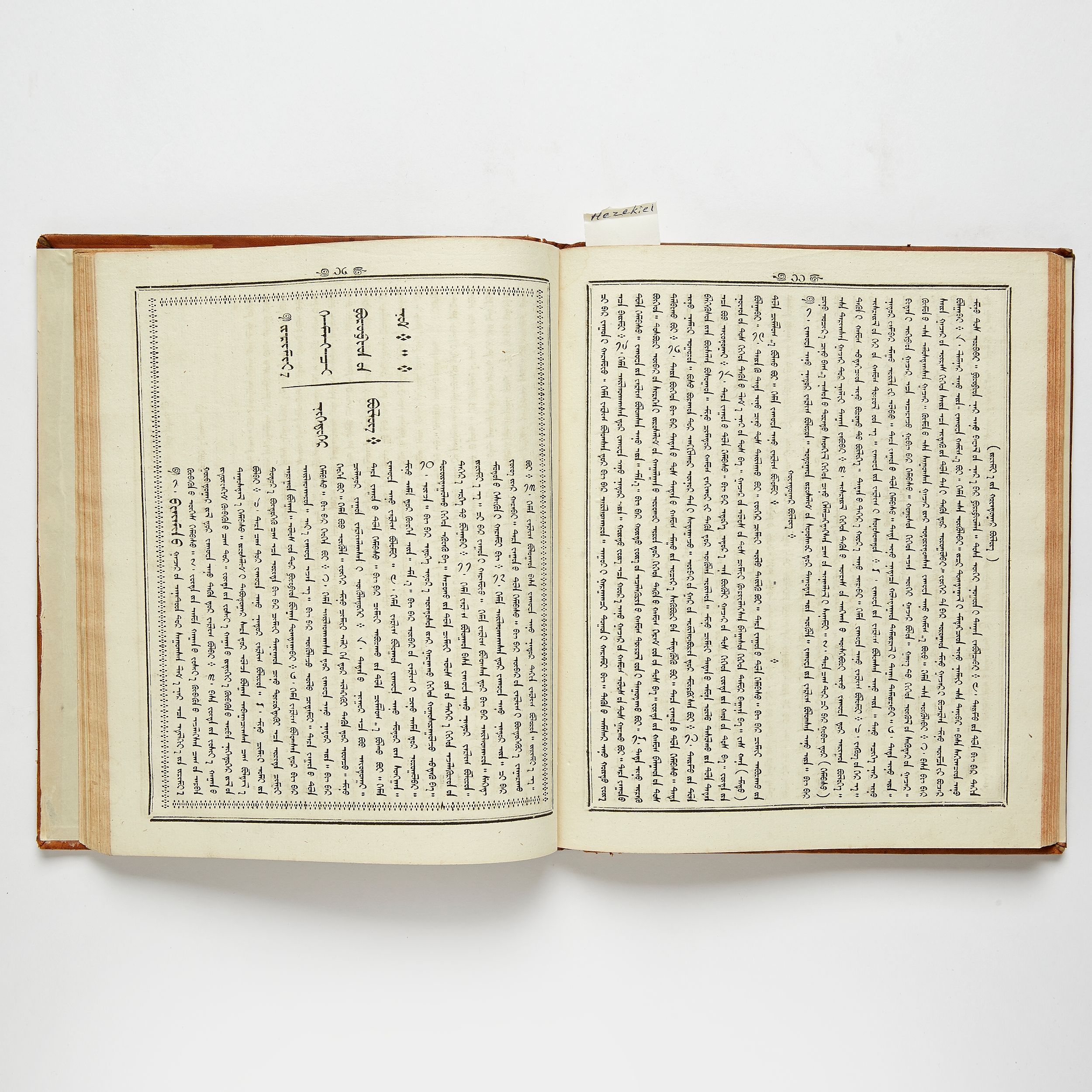
Those Mongols had no such alphabet; they had a spoken language, and as the lands under their rule grew, they adapted their spoken language with the help of local alphabets and wrote it down, just like those Tatar-Khazar tribes who around the year 550 AD had reached the area around the Caspian Sea (Lake Qezwîn), until their state collapsed in the year 969 AD; in terms of language, their situation was worse than that of the tribes of Genghis Khan’s time who had reached the Caucasus and the Middle East, that is, the side that won the war decided which language would be used.
This, in short, is the framework within which the languages of the Middle East were changed, in which the Kurdish language is the greatest loser, and that is also why the emergence of the phenomenon of giving names and surnames in Kurdish society has become more tangled and far more troubled than in the societies around it.
Kurdish surnames
Kurdish surnames that have become family names can be divided according to their origin. These are general patterns, not a complete list.
- Place and village: The most settled and the most accepted kind, like Barzanî, which is tied to the village of Barzan. The family carries the name of its origin, and no memory of shame remains in that name.
- Trade and work: Like Şivan (shepherd), Gavan (cowherd) or Hesinkar (blacksmith). It began as a way of identifying someone, later became a name, and is mostly neutral.
- Religious or social surname: Like Mela (mullah), Hacî (hajji), Şêx (sheikh), Axa (agha) and Beg (bey). They show rank and social standing and pass down to the grandchildren, even if none of them truly holds that quality any longer.
- Physical trait: Like Kor (blind or one-eyed), Kurt (short in stature), Seqet (crippled). Some of them remain as a passing joke, while others the children inherit, and this is the closest to humiliation.
- Event or attitude: The most dangerous and the most lasting kind, and its meaning changes across the generations. People forget the original story but the name remains, and the grandchildren carry it without knowing the reason for it, and after a while it becomes an ordinary name.
There is also an influential factor in the countries that made family names official and compulsory, like Turkey after the Surname Law of 1934, as well as Iraq, Syria and Iran. Sometimes officials recorded, just as it was, the surname that had spread among the people for a family, and in this way a spoken, passing surname became a fixed legal name and part of the official identity. This explains why a hurtful surname now and then lives on down the generations: official registration freezes it (sets it solid), and it is no longer in society’s hands to let that surname pass into oblivion.
Pinning names and surnames on people
This phenomenon of pinning names and surnames on people exists in many traditional societies, but among the Kurds it shows more clearly, because of intertwined social and historical reasons:
- The small, face-to-face society: Villages, tribes and neighbourhoods are bound up with one another, and everyone knows everyone. When something funny or shameful happens, it spreads quickly and stays in the common memory. It stays with its bearer (it sticks), because society does not forget things.
- Oral culture: The collective memory was kept through stories, jokes and surnames, not through writing. A surname is an easy shorthand that holds a whole story, which is why it lives longer than the event itself.
- Many similar names: The repetition of names within a tribe or a village leads people to tell individuals apart by a trait or an event (the one with the donkey…, the beardless one, the loose-mouthed one… and so on). What begins as a way of identifying someone turns into disgrace over time.
- Social control: Mockery (teasing) and pinning surnames on people serve, informally, to correct behaviour and to punish the person who has strayed from custom, without courts or laws. That person’s fear of this kind of disgrace holds him back from many kinds of behaviour.
- The culture of honour and reputation: In societies built on the reputation of the family and the tribe, every act is out in the open and comes under judgement. A surname is sometimes attached to the whole family and stays with the children.
- Entertainment and jokes: In the absence of modern ways (means) of entertainment, the guest halls and the winter evening gatherings were the place for stories and jokes, and a joking surname was ready-made material for laughter.
- Weak mechanisms of correction: There was no one to take a newly made surname away or to apologise for it, and when the bearer of that newly received name resisted, trying to get the name off himself and to set it right, this only made the other side’s wish to keep using that name stronger.
- Accepting the mockery: A mocking surname is not always an insult; its bearer may accept it himself and use it, and this too makes the phenomenon normal and keeps it going.
It is important to say that this is not peculiar to the Kurds alone. We also see it among Arabs, Turks, Persians, Amazigh and other tribal and rural societies. In the cities and in migration it has grown lighter, but social media, in a new way, with “memes” and digital mockery, has brought it back to life and spread it faster and wider across the whole world, and it has become like the soot of the griddle that will not come off us.
In the next part we will shed light on the state of the survival of Kurdish surnames and their disappearance over time.