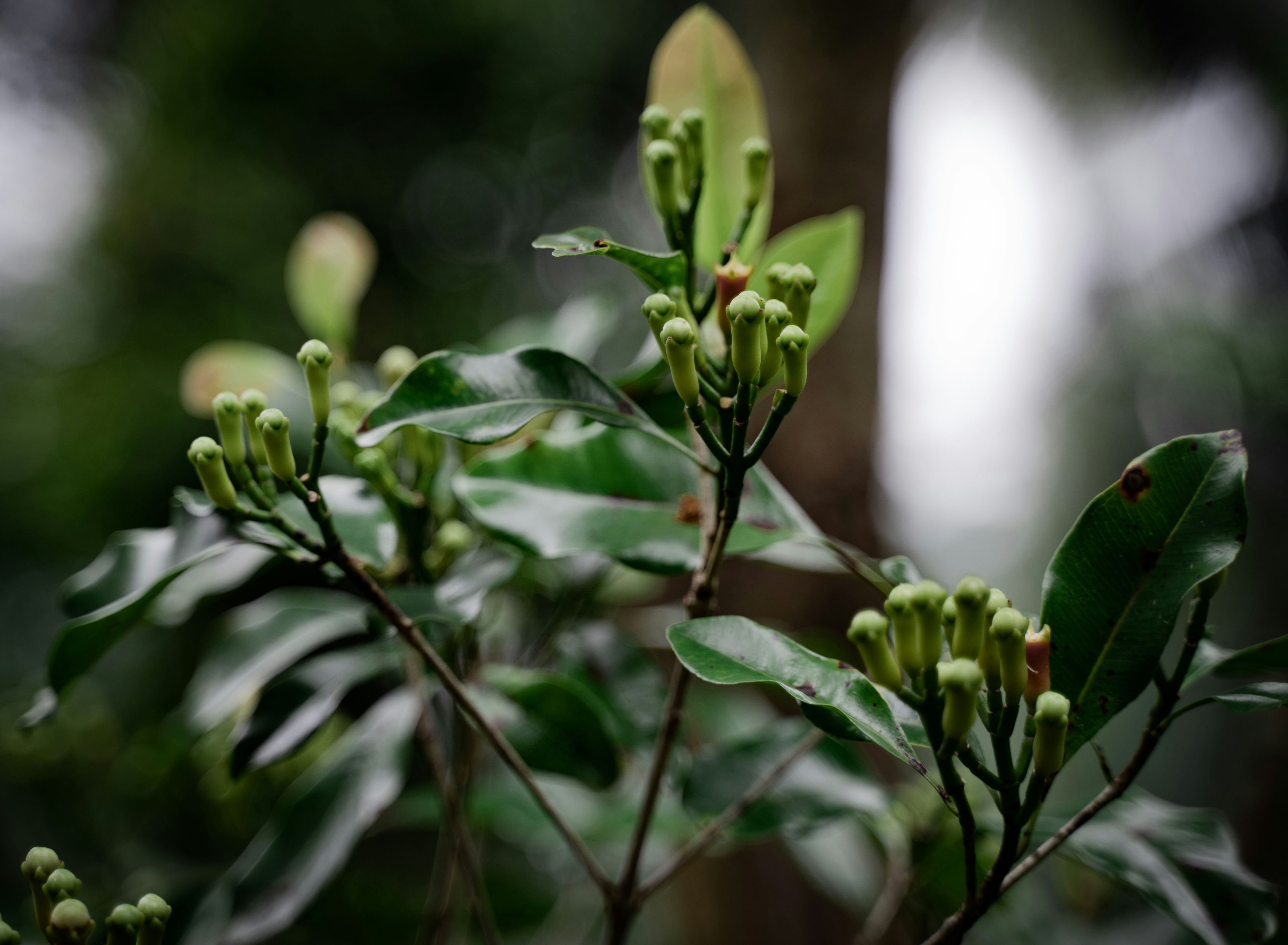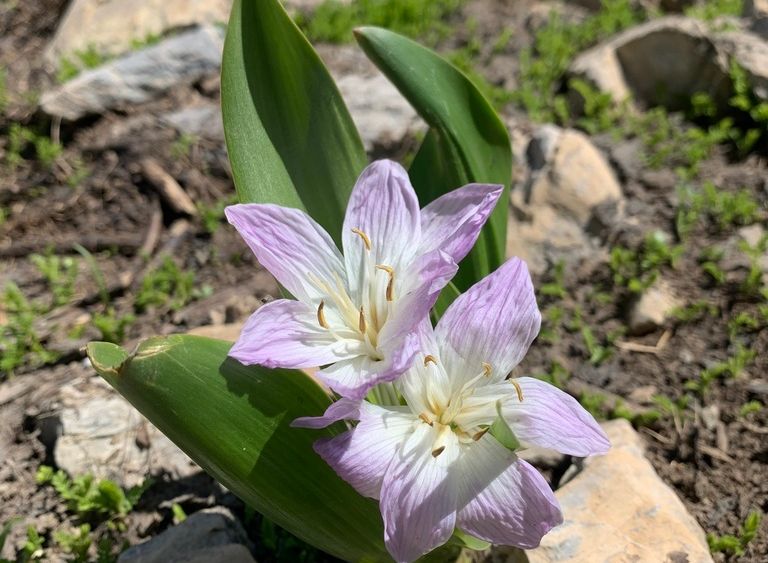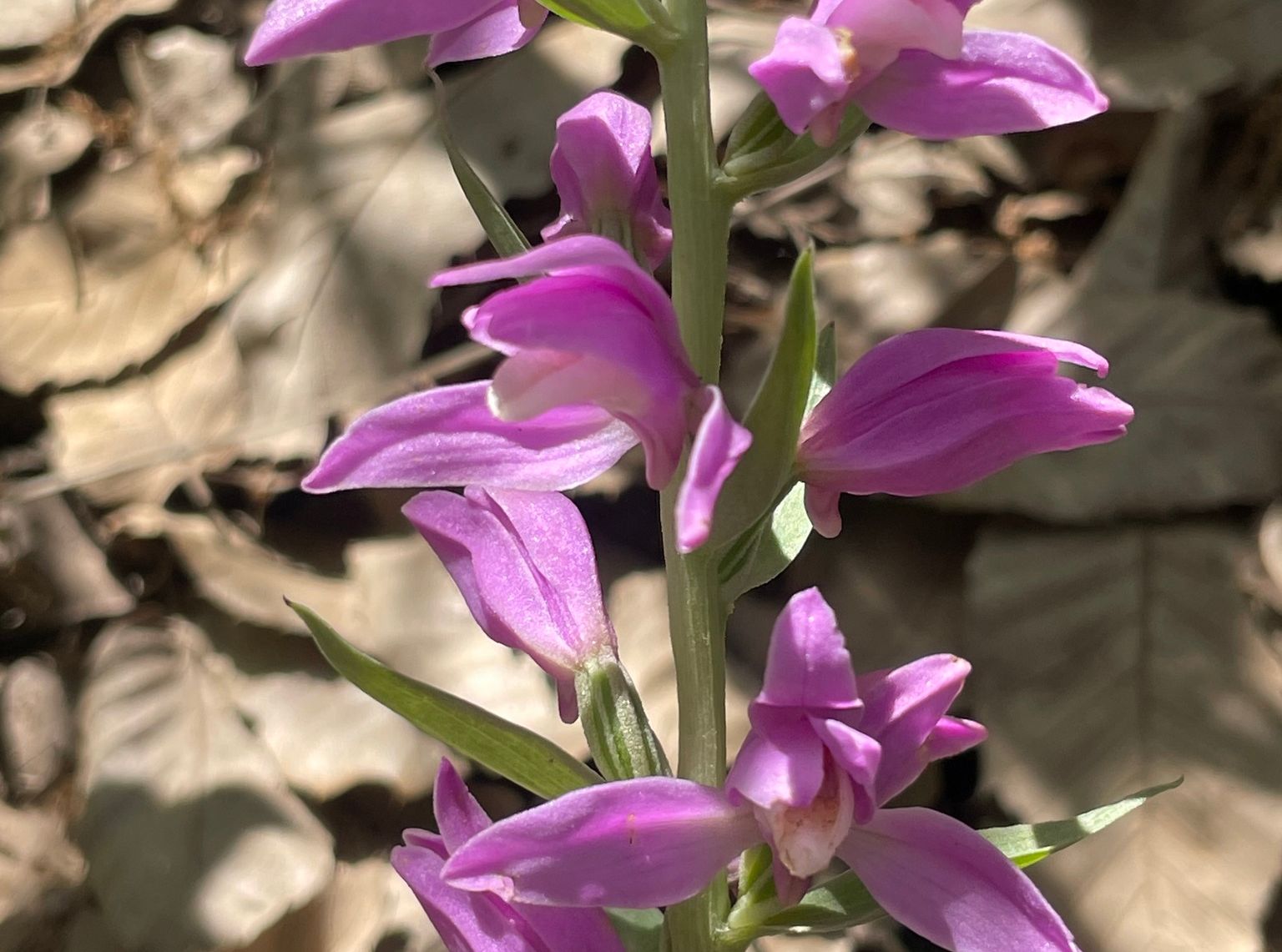
Cephalanthera kurdica is a woodland orchid of the oak forests of Kurdistan: a slender stem, up to about 60 or 70 cm tall, clothed in pointed leaves and topped by a long spike of rose-pink flowers with a white lip[1][2]. It was described in 1895 from Mount Sefîn (Safeen) above Şeqlawe (Shaqlawa) in South Kurdistan (Başûr), and the man who described it called it, without hesitation, the most beautiful of all its genus[1].
How it got its name
- Named by
- Bornm. ex Kraenzl., 1895Published in Bull. Herb. Boissier 3: 143
"By far the most beautiful"
On 27 May 1893 the botanist Joseph Bornmüller (1862–1948)[3] was working the lower slopes of Mount Sefîn, above the village of Şeqlawe in the district of Hewlêr (Erbil), at about 1,100 m[4][5]. It was the second year of a long collecting journey through the Ottoman and Persian lands, his Iter Persico-Turcicum of 1892–93[1]. He found the orchid in full bloom[1] and recognised at once that it was new[1]. He pressed plenty of it under his collection number 1833: duplicates of that one gathering are now kept in at least nine herbaria, from Kew to Vienna[4][5].
From his home in Weimar he sent it, with one other orchid from the same journey, to the botanist Fritz Kränzlin (1847–1934)[1][3]. Kränzlin published both in March 1895 in a short paper with a title that says it all: Zwei neue Orchideen aus Kurdistan, "Two new orchids from Kurdistan"[1]. He kept the name Bornmüller had already written on his labels, Cephalanthera kurdica[1][4]. The printed label on the sheets begins with the word Kurdistania, with "eastern Assyria" only in brackets after it[4][5].
Kränzlin was not a man for understatement:
Von allen bisher bekannten Cephalanthera-Arten ist diese bei Weitem die schönste.
Of all the Cephalanthera species known so far, this is by far the most beautiful.[1] (our translation)
On strong plants, he wrote, 20 to 25 large, pale rose-red flowers with a white lip stood open at the same time, and on some specimens the flowers began as low as the bottom third of the stem. "Herr J. Bornmüller", he ended, "had the great good fortune to find the plant at the very height of its development"[1] (our translation).
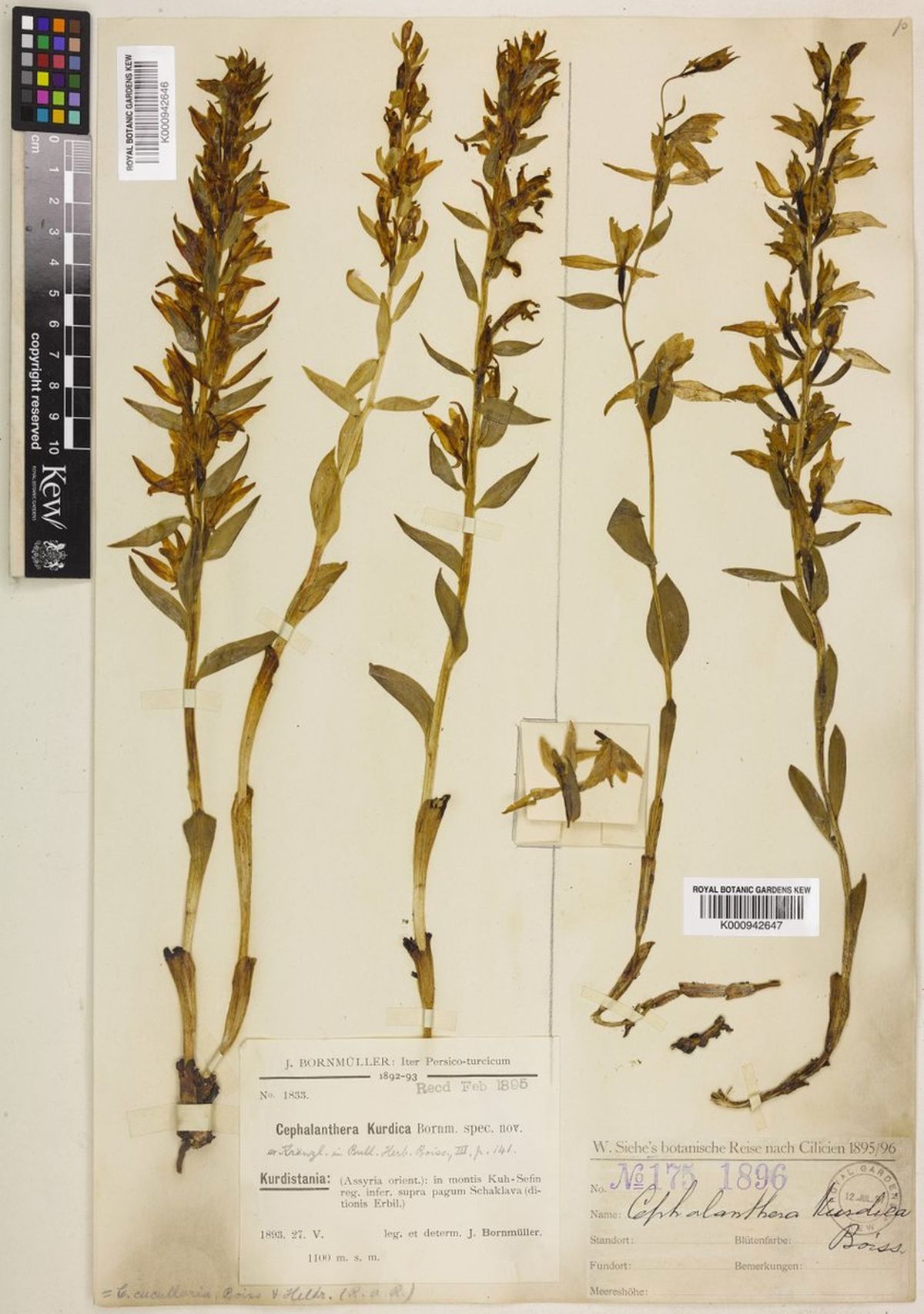
The printed paper has two small slips. It spells the mountain "Kuh-Setin" and the district "Esbil"; Bornmüller's own labels on the specimens read "Kuh-Sefin" and "Erbil"[1][4][5].
The other orchid from Kurdistan
The second orchid in Kränzlin's paper had a sadder story. Bornmüller had found it on 28 June 1893 in the oak woods of Mount Hendirên (Händarin, as the paper spells it) near Rewandiz (Rawanduz), at 1,200–1,300 m, and only a single plant: Unicum!, the paper notes[1]. Kränzlin named it Comperia karduchorum and wrote that the lucky finder had been unable to find a second one, "although it was clear to him at once that he had found something quite special"[1] (our translation). Kränzlin feared both species of its genus were dying out[1]. Botanists today count Bornmüller's plant as part of a more widespread orchid, Himantoglossum comperianum, which grows from the Crimea to western Iran[6].
One issue ahead
The Kurdish orchid nearly carried another name. In the very next issue of the same journal, in April 1895, the botanist George Edward Post (1838–1909)[3] of Beirut described a Cephalanthera andrusi, a "beautiful species" whose flowers were deep pink even when dried, from oak woods near the river Tigris, flowering in May[7][3]. Bornmüller later saw that it was the same plant as his own, and on his herbarium label he noted both papers side by side: kurdica in issue 3 "(März)", andrusi in issue 4 "(April)"[8][5]. Because Kränzlin's name appeared in the issue before, kurdica is the one that stands, and C. andrusi is now only a synonym[1][7][3][6].
A Kurdish orchid, or a pink form of a white one?
Bornmüller himself began to have doubts. In 1910 he made it a variety of Cephalanthera cucullata[3], and in 1911, writing up plants gathered by the collector Strauss in Kirmaşan (Kermanshah) in East Kurdistan (Rojhilat), he noted that the Kurdish orchid was extremely close to Cephalanthera cucullata, a species he had since seen alive in the mountains of Lydia, in western Anatolia. The two had the same peculiar habit and the same leaves, he wrote; they differed only in colour, since C. cucullata has milk-white flowers[8]. He thought it better treated as a subspecies of C. cucullata, and he said plainly that the spur length Kränzlin had used to separate them did not hold up[8]. Someone made the same point in pencil at the foot of the Kew sheet: "= C. cucullata"[4]. On the Jena duplicate, a red note reads "subsp. (β) Kurdica"[5].
Later botanists went back and forth between species and subspecies[3][6]. An orchid described in 1908 from oak woods in the Ardanuç gorge, then in the Batumi province of the Caucasus and today in Artvin in north-eastern Turkey, C. floribunda, was for a time a subspecies of the Kurdish one and for a time of C. cucullata[6][9]. Kew's checklist today keeps Cephalanthera kurdica as a species in its own right, with all these names as synonyms[6].
What to look for
Kränzlin's description and a modern study of the specimens from Başûr give a clear picture[1][2]:
- a short creeping rhizome, from which rise stems 25 to 60 cm tall in Bornmüller's plants (10 to 70 cm in the Başûr herbaria), sometimes slightly zig-zag, sheathed at the base;
- three to five oval to oblong, pointed leaves clasping the stem, which grade upward into leaf-like bracts, so that it is hard to say where the leaves end and the flower spike begins;
- a long spike of many flowers; the sepals narrow and drawn out to a point, the petals a little shorter and broader;
- a lip with narrow side lobes and a broad, rounded front lobe, ending behind in a short curved spur, about 3 mm long[1].
The flowers are mostly bright pink[2]. Kränzlin found them much larger than those of Cephalanthera rubra, the species whose lip he found it most resembled[1].
Pink, and sometimes white
The colour is the plant's signature: rose-pink sepals and petals and a white lip, as Kränzlin wrote[1]. Even that was once printed the wrong way round. In 1911 Bornmüller added a footnote correcting an earlier paper, the Florula Lydiae: the flowers are red with a white lip, "not the other way round (white flowers with a red lip)", as had been printed there by mistake[8] (our translation).
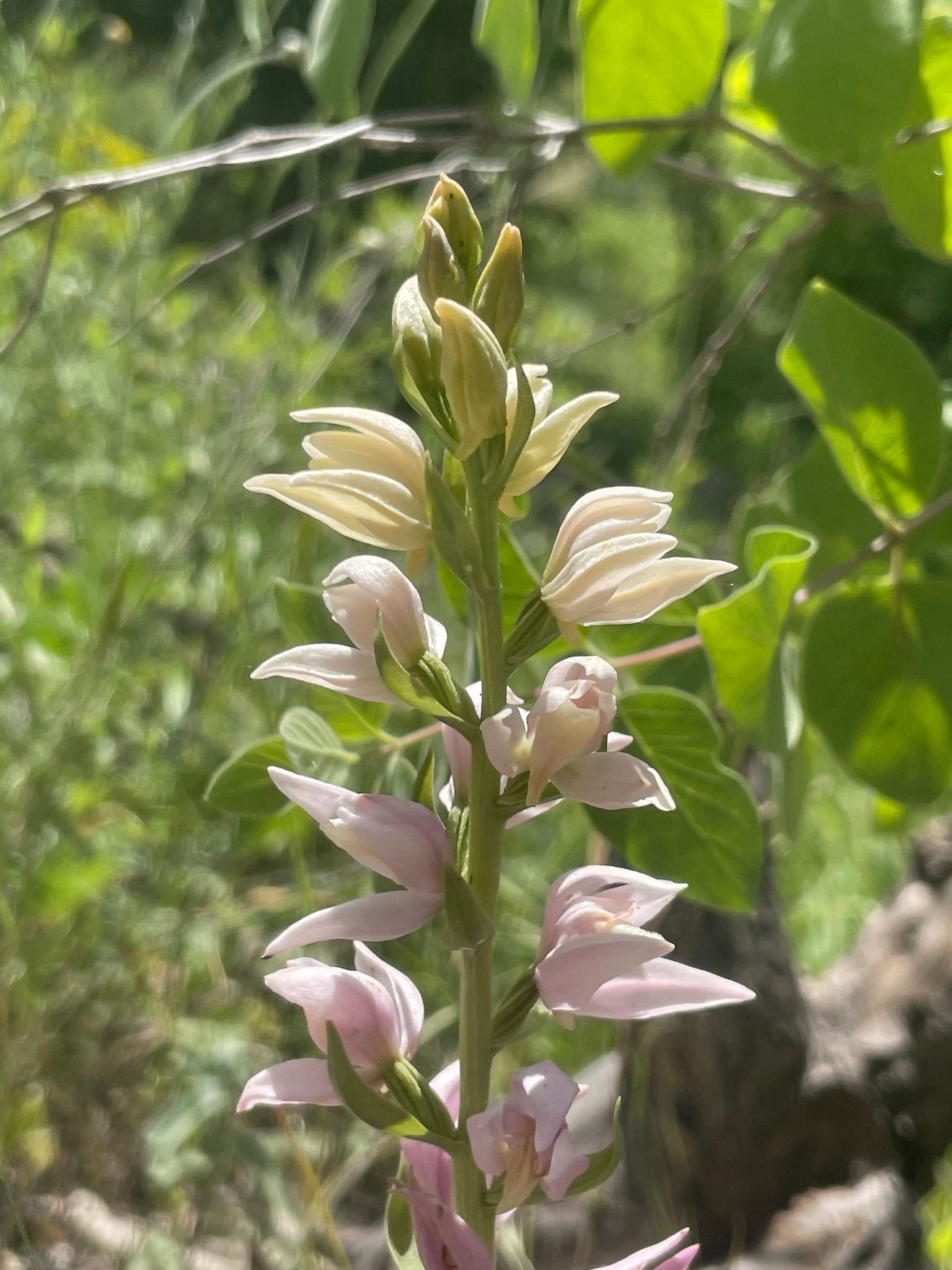
The modern Başûr study describes the flowers as mostly bright pink, rarely white, with the lip pale rose-pink in its lower part and whitish above[2]. Some plants are much paler than others, as photographs from the north of Hewlêr province show.
Where it grows
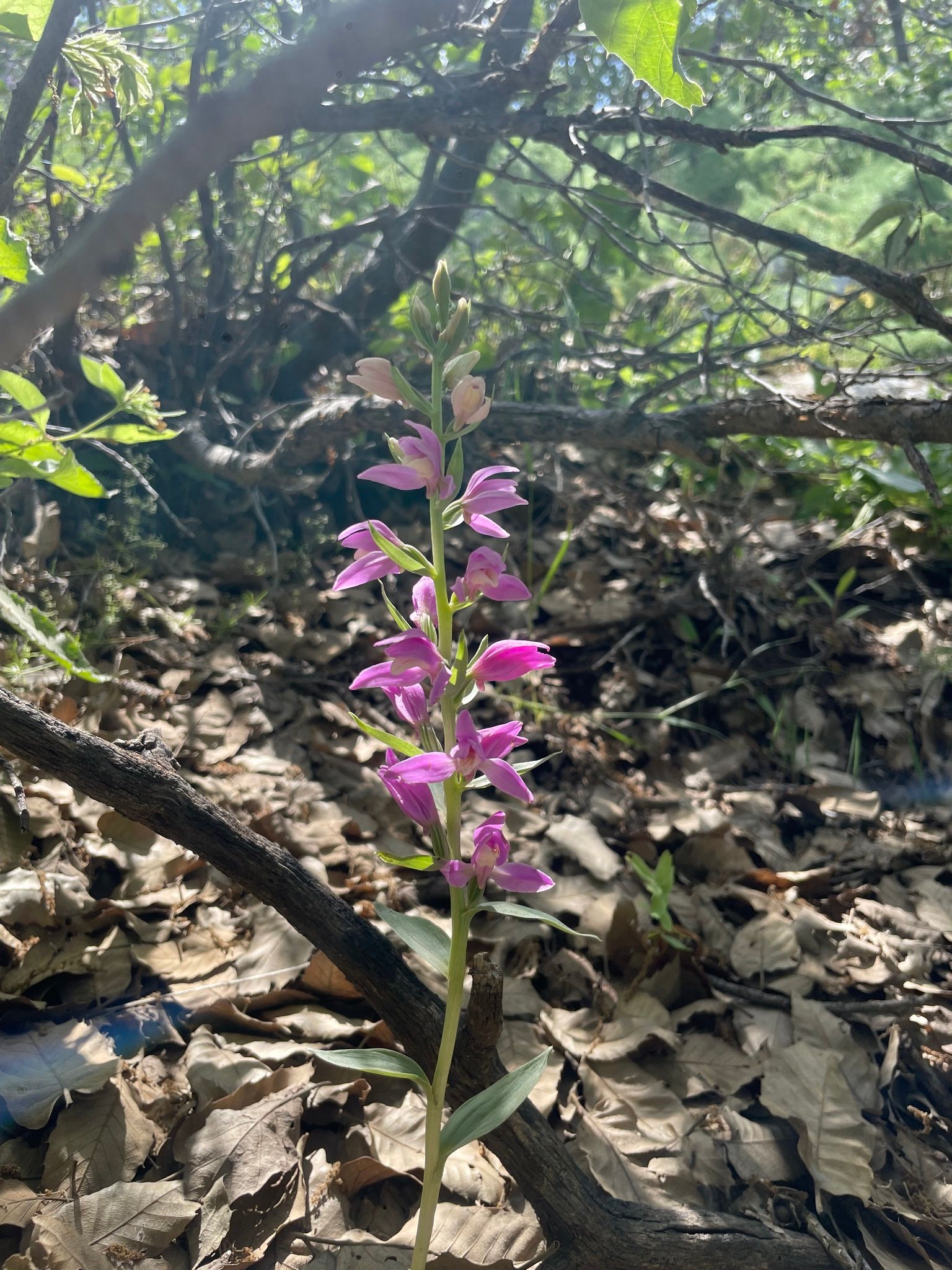
Kew's checklist gives its native range as Turkey to the Caucasus and north-western and western Iran[6]. Its heartland is the oak belt of Kurdistan: the authors of the Başûr herbarium study even call it "endemic to Kurdistan"[2], although older records reach well beyond it, as the list below shows. It is the only Cephalanthera known from Iraq[2]. Again and again the records name the same kind of place: oak woods[7][8][2][10].
- Başûr: Mount Sefîn above Şeqlawe, the type locality, at 1,100–1,200 m[1][4]; oak woods at Kan-i-Watman between Hewlêr and Rewandiz, at 900 m, gathered by the botanist František Nábělek[10]; and, in herbaria in Başûr, many records from Ezmer (Azmer), Qeredax (Qaradagh), Qaiwan Mountain and Şarbajêr (Sharbazher), between 910 and 1,750 m, on mountainsides and in oak woodland on sandy clay[2]. The traveller Sir Wilfred Thesiger pressed it in Iraq, mostly in May 1951, though the records of the Natural History Museum in London give no place[11].
- Rojhilat: the Kuh-i-Tarikha mountains and the valley Bornmüller spells "Dscham-Tueh", in the district of the Seymareh river (Saimerre) in Kirmaşan, in May 1904[8]. On Tarikha, Strauss found it growing in a rotten oak trunk[8].
- Bakur (North Kurdistan): photographed in flower in the provinces of Amed (Diyarbakır) and Sêrt (Siirt)[12].
- Beyond Kurdistan it reaches Cilicia on the southern coast of Anatolia[8][4], Syria and Lebanon, and the Caucasus[6][9].
It flowers from April to June[2]. Most of the dated gatherings above, from 1893 to 2025, were made in May[8][4][11][12].
A Kurdish name
No Kurdish name was recorded with the plant by the botanists who collected it. Ehmedê Dirihî's dictionary of Kurdish plant names lists it as saleba qulingêkurdan[13]. That is a dictionary name, formed after the Latin ("… of the Kurds") rather than collected from people who know the plant, and it carries no region or informant. Its first word belongs to a family of Kurdish orchid names: on the same page the dictionary gives sale and salep for the orchids of the genus Orchis[13].
Conservation
The species has not been assessed for the IUCN Red List[14]. The authors of the Başûr herbarium study call it frequent, but note that it suffers from the degradation of the mixed forest zone where it grows[2].
Sources
- 1.Kränzlin, F. (1895). Zwei neue Orchideen aus Kurdistan. Bulletin de l'Herbier Boissier 3: 141–144.
- acknpsp. 143.
- brpp. 143–144.
- dijqp. 144.
- efhlp. 141.
- got
- mp. 142.
- Bull. Herb. Boissier 3: p. 143. archive.orghttps://archive.org/details/bulletindelherbi03herb/page/n162/mode/1upaccessed 14 November 2026
- p. 143. archive.orghttps://archive.org/details/bulletindelherbi03herb/page/n162/mode/1upaccessed 14 November 2026
- 2.Ahmed, S. A., Salih, R. M. & Hama, S. Y. H. Y. (2023). Morphological characterization and conservation status for the herbarium specimens of Orchidaceae in Kurdistan Iraq. Ibn Al-Haitham Journal for Pure and Applied Sciences 36(2): 55–84. doi:10.30526/36.2.3031https://doi.org/10.30526/36.2.3031
- 3.International Plant Names Index. Royal Botanic Gardens, Kew, Harvard University Herbaria and Australian National Herbarium.
- 4.abcdefghiRoyal Botanic Gardens, Kew – Herbarium Specimens. via GBIF, herbarium specimen K000942646 (via GBIF). gbif.orghttps://www.gbif.org/dataset/cd6e21c8-9e8a-493a-8a76-fbf7862069e5
- 5.abcdefHerbarium Haussknecht, Jena (JE), specimen records (JACQ) via GBIF. Jena, isotype JE00011274, and other duplicates of Bornmüller 1833 (via GBIF). api.gbif.orghttps://api.gbif.org/v1/occurrence/3028980654
- 6.Plants of the World Online. Royal Botanic Gardens, Kew.
- 7.Post, G. E. & Autran, E. (1895). Plantae Postianae, fasciculus VII. Bulletin de l'Herbier Boissier 3(4): 150–166.
- 8.Bornmüller, J. (1911). Collectiones Straussianae novae. Beihefte zum Botanischen Centralblatt 28(2).
- 9.abWoronow's Cephalanthera floribunda: specimens W 1929-0005057 and TU321306 (via GBIF).
- 10.abSlovak Academy of Sciences herbarium, specimens SAV0001418–SAV0001420, F. Nábělek (via GBIF).
- 11.abNatural History Museum, London, specimens BM000062363–BM000062366, W. Thesiger, 1951 (via GBIF).
- 12.abiNaturalist. observations 279706960, 283448126, 282071667 and 336141787 (photos and records). inaturalist.orghttps://www.inaturalist.org/
- 13.abAhmet Kasımoğlu (Ehmedê Dirihî) (2013). Ferhenga Navên Nebatan a Kurdî (Dictionary of Kurdish Plant Names). Mardin Artuklu University, Institute of Living Languages in Turkey (ISBN 978-605-4202-12-6), p. 670.
- 14.↩IUCN Red List category via GBIF: not evaluated.
Last updated 20 November 2026