How it got its name
- Named by
- Maroofi & Rastegar, 2022Published in Phytotaxa 561: 112
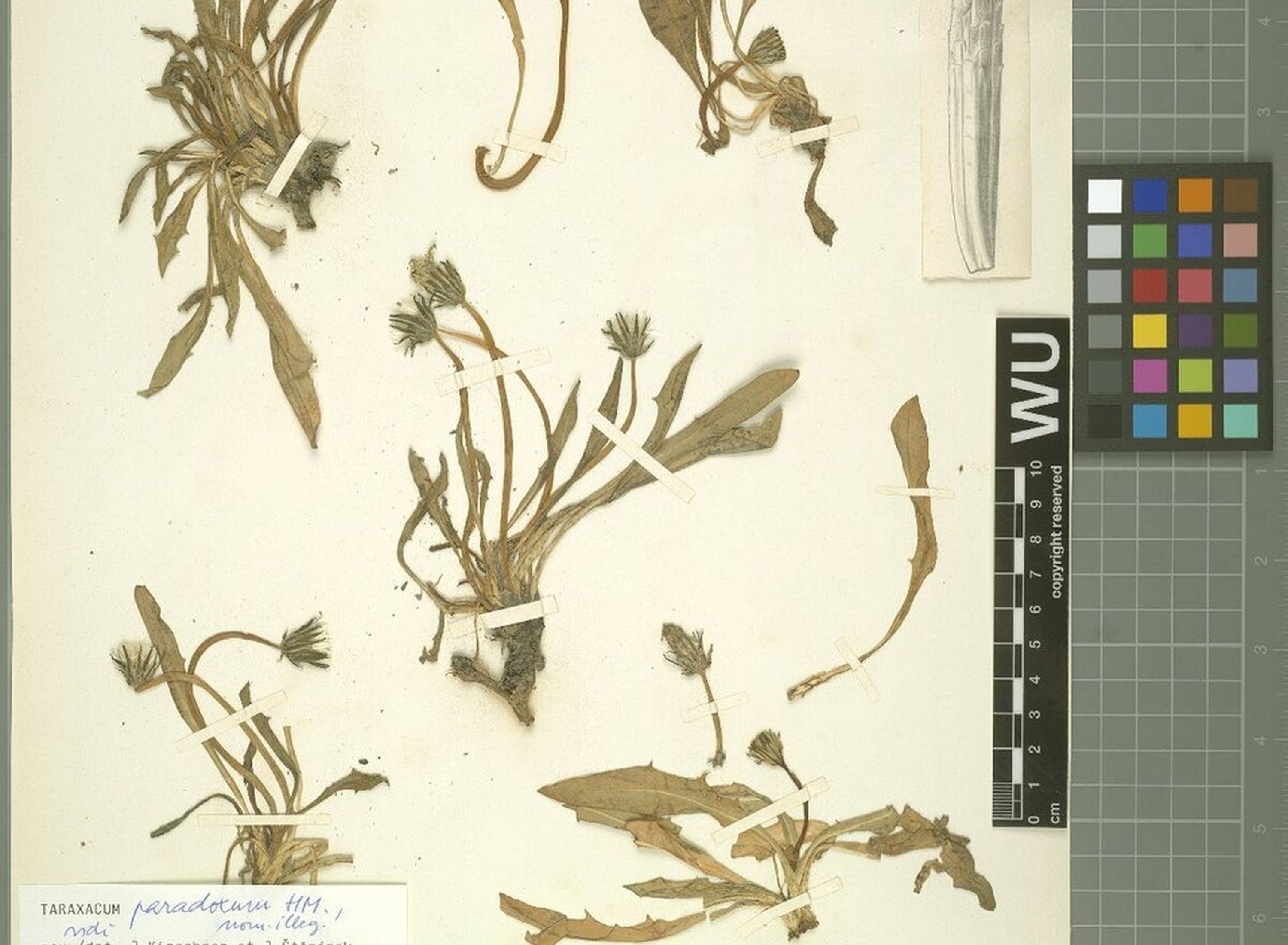
- Type collected by
- H. Maroofi14 May 2015
A tansy with one mountain
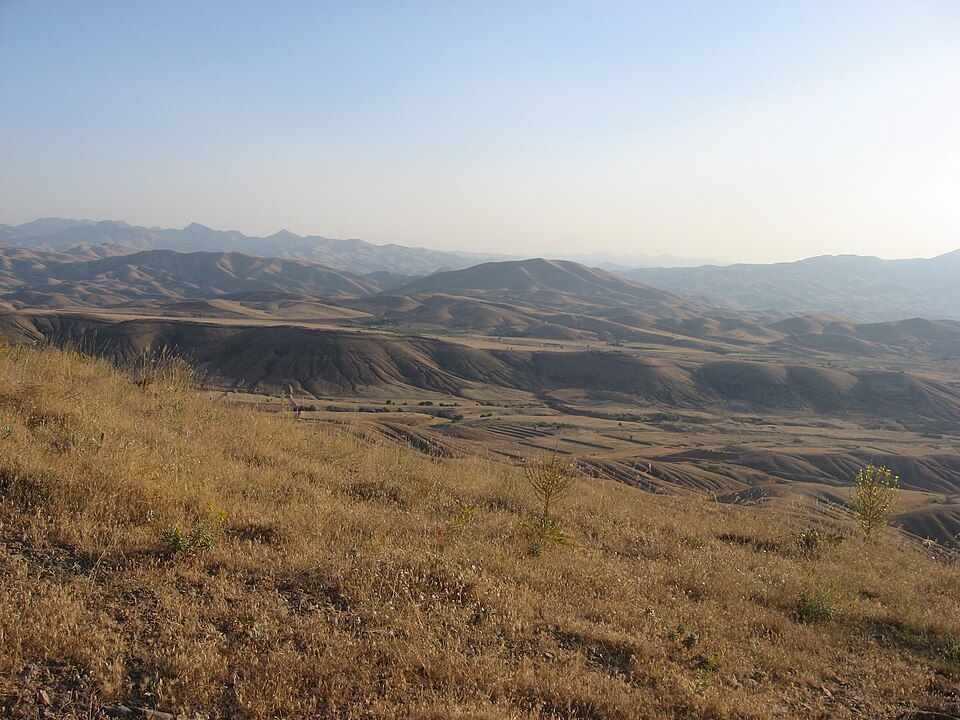
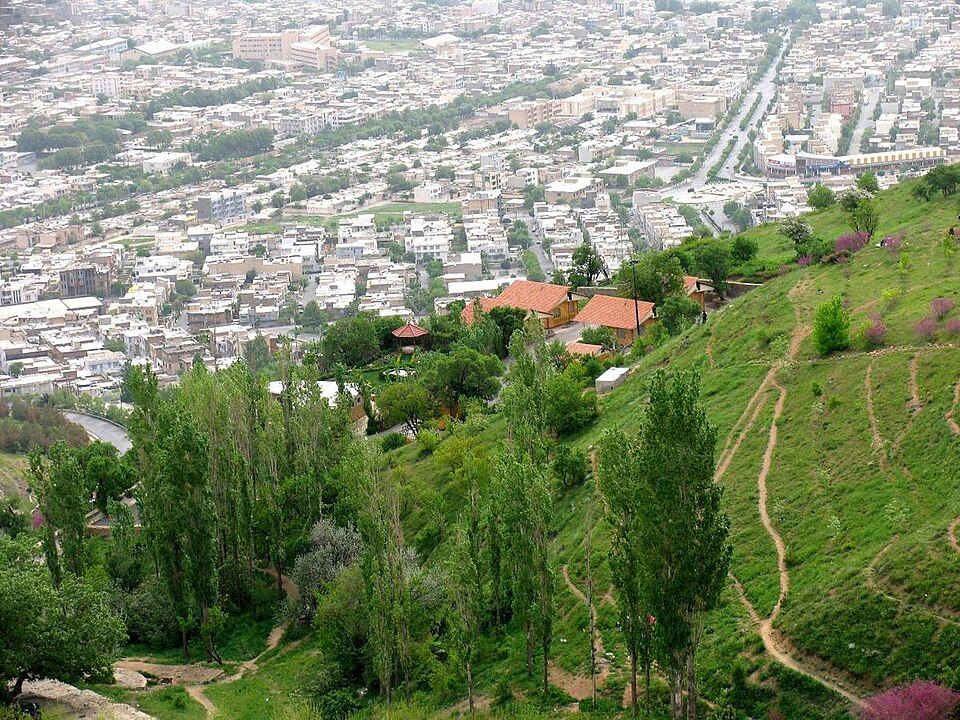
Tanacetum kurdistanicum is a plant of a single mountain: Abidar, the mountain that rises above the city of Sine (Sanandaj) in East Kurdistan (Rojhilat). Every known specimen comes from its slopes[1], and the botanists who described it assess it as Critically Endangered[1][2].
It is a tansy, a member of the genus Tanacetum in the daisy family (Asteraceae), and it was described only in 2022[1][3].
Eighteen years on Abidar
The story of this plant is the story of one botanist returning to the same mountain. Hosein Maroofi first pressed it on 20 June 2003, at 2,000 m on Abidar. He was back on 14 May 2015, when he collected the specimen that would become the type, at 1,750 m on the north-western slopes west of the city. He returned again in May and June 2018, and in May 2021 with his colleague Azad Rastegar[1].
All of these sheets are kept in Sine itself, in the herbarium of the Kurdistan Agricultural and Natural Resources Research and Education Center (herbarium code HKS)[1][4]. A plant of Sine is kept in Sine.
In September 2022 Rastegar, Maroofi and Mohammad Aref Tabad published it in the journal Phytotaxa, in a paper titled Two new species of Tanacetum (Anthemideae, Asteraceae) from western Iran[1]. The name honours the land it was found in:
The species epithet was derived from Kurdistan, the province where the new species was found.[1]
So kurdistanicum means "of Kurdistan". The authors meant the province of Kurdistan, whose capital is Sine, but it carries the name of all Kurdistan.
A tansy without petals
The Abidar plant is a quiet relative of the common tansy. According to its first description[1]:
- It is a perennial that spreads by rhizomes and has a woody base.
- Its stems are numerous, upright or curving upwards, 25–65 cm tall, grooved, and densely downy to felted, rarely almost hairless.
- The leaves are oblong and sheathe the stem. The basal leaves, stalk included, are 6–13 cm long and 1–2 cm wide, cut twice into narrow segments, and densely covered with silky hairs and tiny stalkless glands. Higher up the leaves become smaller, stalkless and cut only once, and often sit like small leafy bracts just under a flower head.
- Each stem carries 1 to 3 flower heads, rarely up to 7, set well apart.
- The cup of bracts around each head is 13–20 mm long and 9–12 mm wide, with six rows of bracts, downy and with broad papery margins.
- There are no showy petals. The few female flowers around the edge are "few, inconspicuous", and the centre is filled with deep yellow tubular flowers 3.5–4.5 mm long.
- The fruits are 4–4.5 mm long, with 14 ribs and a tiny toothed crown about 0.3 mm long.
It flowers from April to May and sets fruit from July to September[1].
The authors could not place it next to any known species. Comparing it with Flora Iranica, the Persian-language Flora of Iran, the floras of neighbouring countries and recent species descriptions, they concluded that it "has no close relatives"[1]. A plant with no near kin, on one mountain: that alone makes it remarkable.
A second new tansy, from the mountains of Ûrmiye
The same 2022 paper described a second new tansy, Tanacetum urmiense. The two are not close relatives, but side by side they make a striking pair[1]:
- Mountain: T. kurdistanicum Abidar, at Sine; T. urmiense Dalanpar, north-west of Ûrmiye (Urmia), and Boz-e-Sina
- Altitude: T. kurdistanicum 1,650–2,000 m; T. urmiense 2,800–3,100 m
- Slopes: T. kurdistanicum dry, north-facing; T. urmiense humid, north-facing
- Height: T. kurdistanicum 25–65 cm; T. urmiense 5–12 cm
- Edge flowers: T. kurdistanicum few, inconspicuous; T. urmiense about 20, white
- Centre: T. kurdistanicum deep yellow; T. urmiense greenish yellow
T. urmiense grows high in the alpine zone, close to where Rojhilat meets Başûr and Bakur, the authors' "borders of Iraq and Turkey"[1]. Its epithet comes from Ûrmiye, "a city close to the mountains" where it was collected, and the authors relate it to T. hololeucum[1]. Both new species are Irano-Turanian plants, and the authors assessed both as Critically Endangered[1].
So in one paper, two corners of Rojhilat each gave science a tansy of their own: a tall, deep yellow one without showy rays from the dry hills of Sine, and a small white-rayed one from the wet heights above Ûrmiye.
Where it grows
T. kurdistanicum is known only from Abidar, which the authors call "a subalpine region in Kurdistan". It grows on dry northern slopes between 1,650 and 2,000 m[1]. Kew's checklist gives its range simply as north-western Iran[5].
The 2022 paper speaks of "a few localities on Abidar Mountain", each with fewer than 100 plants, spread over about 3 km²[1]. A follow-up study in 2025 by Rastegar, Maroofi and two colleagues describes it more starkly: one population, in a very restricted habitat on the north-eastern slopes of the mountain, with an area of occupancy of under 2 km²[2]. (The two papers name different slopes: north-western for the type specimen, north-eastern for the population.)
Critically Endangered
Maroofi and Rastegar have watched the plant for years. In 2022 they wrote that their "annual monitoring revealed degradation in population size and reproduction structure", and they assessed it as Critically Endangered under the criteria of the IUCN[1]. Their 2025 assessment, based on the number of plants, how many of them reproduce and how stable the population has been over the past ten years, reached the same verdict, Critically Endangered[2]. The plant has not yet been assessed for the IUCN Red List itself[4].
The 2025 study notes a double edge to the plant's isolation: it protects the species, but it also keeps it from spreading. To save it the authors propose[2]:
- seed banking in Iran's natural resources gene bank, and growing it in botanical gardens and on research farms;
- protection on the mountain, enforced by the natural resources and environmental protection authorities;
- reinforcing the population by collecting seed and sowing it back in its own habitat and in similar habitats around Sine.
Kurdish names
No Kurdish name has been recorded for Tanacetum kurdistanicum itself. That is no surprise for a plant first described in 2022 and known from one mountain.
For the genus as a whole, Ehmedê Dirihî's dictionary of Kurdish plant names gives eraqsipî for Tanacetum[6]. It is a genus name, to be checked before it is used for this species.
The better-known tansies have many Kurdish names in the same dictionary:
- the common tansy, Tanacetum vulgare: giyayê kirman and giyayê kurman, with birîngiya, giyayê birînan, gulemêş and vila çeqer[6];
- costmary, Tanacetum balsamita: gulehengiwên, with marsima, marsuvan, marşivan, merseme and zirwezerd[6].
Whether the people who walk on Abidar have a name of their own for the tansy of their mountain is a question still waiting to be asked.
Sources
- 1.Rastegar, A., Maroofi, H. & Tabad, M.A. (2022). Two new species of Tanacetum (Anthemideae, Asteraceae) from western Iran. Phytotaxa 561(1): 111–. doi:10.11646/phytotaxa.561.1.11https://doi.org/10.11646/phytotaxa.561.1.11
- abcdefghijklmnopq
- Phytotaxa 561: 112 (via IPNI type data and the Plazi material citation in GBIF). ipni.orghttps://www.ipni.org/api/1/n/urn:lsid:ipni.org:names:77304652-1accessed 14 November 2026
- material citations, Plazi treatment via GBIF dataset ac70edf1. api.gbif.orghttps://api.gbif.org/v1/occurrence/3898308301accessed 14 November 2026
- 2.Rastegar, A., Maroofi, H., Jalili, A. & Jamzad, Z. (2025). The conservation status of Tanacetum kurdistanicum, an endemic species of Iran. Iran Nature 10(4): 107–113. doi:10.22092/irn.2025.370274.1662https://doi.org/10.22092/irn.2025.370274.1662
- abcd
- English abstract, p. 107. irannature.areeo.ac.irhttps://irannature.areeo.ac.ir/article_134765.html?lang=enaccessed 14 November 2026
- 3.International Plant Names Index. Royal Botanic Gardens, Kew, Harvard University Herbaria and Australian National Herbarium.
- ↩Tanacetum kurdistanicum Maroofi & Rastegar.
- urn:lsid:ipni.org:names:77304652-1. ipni.orghttps://www.ipni.org/n/77304652-1accessed 14 November 2026
- 4.GBIF.org GBIF Backbone Taxonomy and occurrence records. gbif.orghttps://www.gbif.org/
- 5.Plants of the World Online. Royal Botanic Gardens, Kew.
- ↩Tanacetum kurdistanicum.
- plant_name_id 3296377. powo.science.kew.orghttps://powo.science.kew.org/taxon/urn:lsid:ipni.org:names:77304652-1accessed 14 November 2026
- 6.Ahmet Kasımoğlu (Ehmedê Dirihî) (2013). Ferhenga Navên Nebatan a Kurdî (Dictionary of Kurdish Plant Names). Mardin Artuklu University, Institute of Living Languages in Turkey (ISBN 978-605-4202-12-6).
Last updated 20 November 2026