Everybody knows the dandelion clock: blow on it, and the seeds sail off, each one hanging from its little parachute on a thin stalk. Botanists call that stalk the beak, and almost every dandelion has one[1]. Taraxacum kurdicum is a dandelion of the high mountains of Kurdistan whose fruits have practically none: the parachute sits almost directly on the seed[2][1][3].
It grows by melting snow and in damp alpine turf, at 2,700 metres and more, on the mountains of Sasûn and Cilo in North Kurdistan (Bakur) and on Helgurd in South Kurdistan (Başûr)[2][4][1]. Its story is one of a botanist who could not believe his eyes, a name that was already taken, and two different plants that have both been called Taraxacum kurdicum.
How it got its name
- Named by
- Hand.-Mazz. ex Nábělek, 1925Published in Spisy Přír. Fak. Masarykovy Univ. 52: 52
"Downright astonished" on Mount Meleto
In 1910 the Natural Science Orient Society of Vienna sent an expedition to Mesopotamia and Kurdistan, and its botanist was the young Heinrich von Handel-Mazzetti (1882–1940)[2][5][6]. He knew dandelions well: three years earlier he had published a monograph of the whole genus[1].
On 11 August 1910 he was on Mount Meleto in Sasûn (Sason), then in the Ottoman province of Bedlîs (Bitlis)[2][6]. Between 2,700 and 3,100 metres, on limestone, a small dandelion was common: by snowmelt water, on damp rocks and in somewhat drier places too[2][7]. In every part it matched another mountain dandelion, Taraxacum stevenii, except one: its ripe fruits had no beak[2]. He wrote:
I was downright astonished when, on the spot, I looked at the ripe fruits of this plant, which at first sight, and even on close examination of all its other parts, was exactly like T. stevenii. At first I thought it was an abnormality (virescence), since this leads to exactly the same structures in T. vulgare [the common dandelion], but I found no others, and in cultivation they proved able to germinate; sadly, though, the plant died in its second year.[2] (our translation)
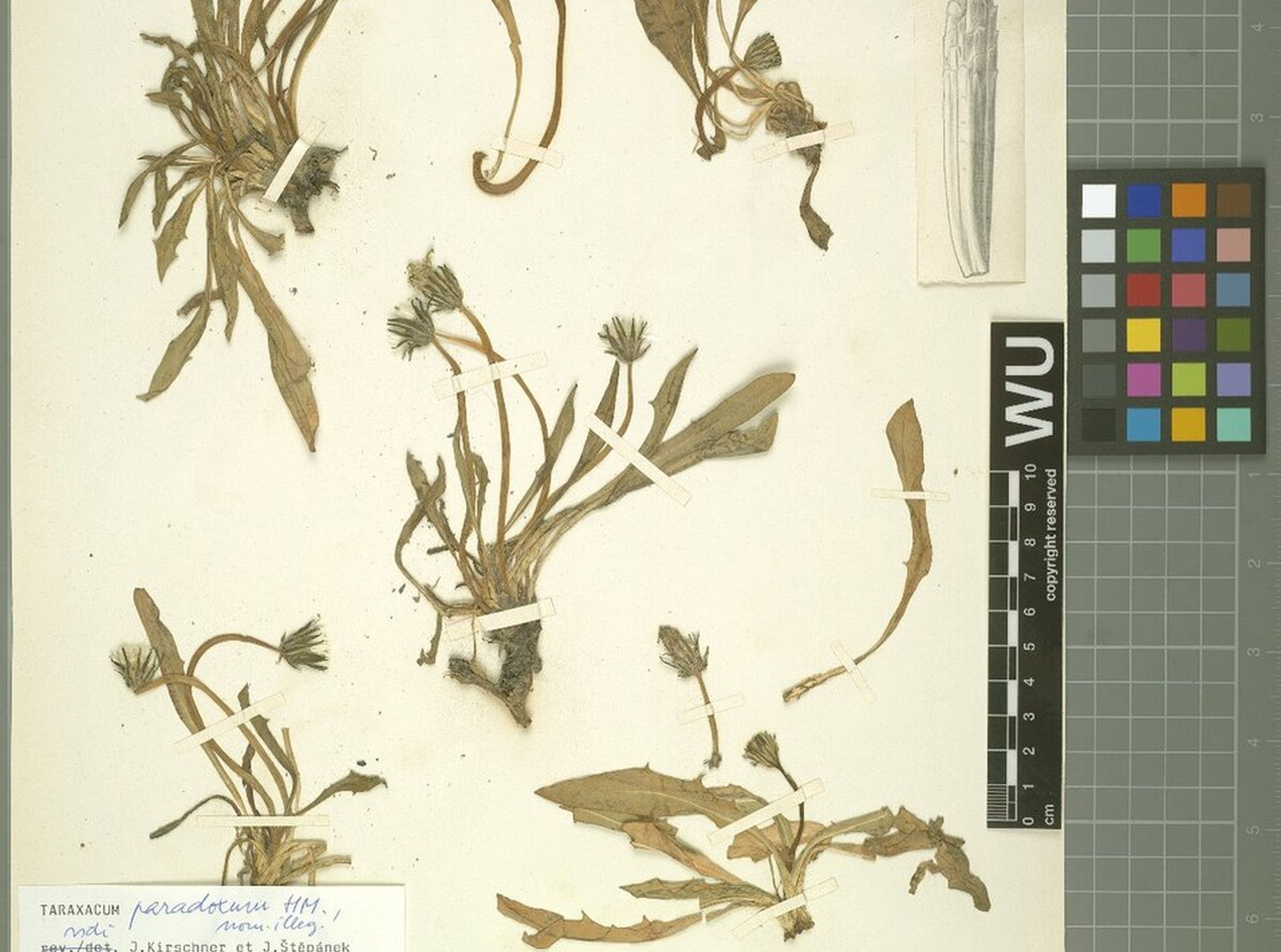
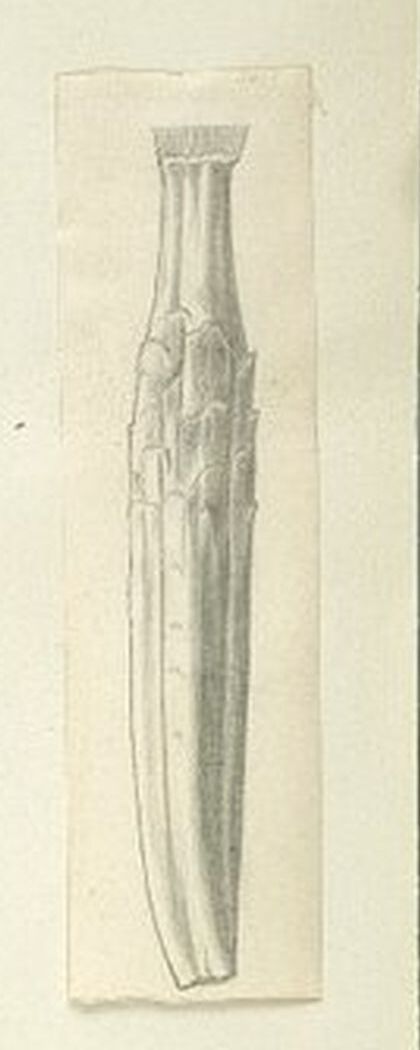
In Vienna he described it in 1913 as a new species and gave it a fitting name: Taraxacum paradoxum, the paradoxical dandelion[2]. A drawing of its fruit was printed with the description[2], and a pencil drawing of a long, narrow fruit is still mounted on one of his specimens in the University of Vienna's herbarium[6].
A name that was already taken
There was a problem. Three years earlier, in 1910, the botanist Alvar Palmgren (1880–1960) had already named a Taraxacum paradoxum[5]. A 1909 specimen of his, kept as a type in Zürich, comes from a shore meadow among bushes on the Åland islands in the Baltic[8]. In botany a name can be used only once, and the older one wins.
Handel-Mazzetti needed a new name, and he chose Kurdistan. On one of Nábělek's sheets, Handel-Mazzetti's identification slip carries an undated handwritten line: "Taraxacum kurdicum Hand.-Mzt. nom. novum. Syn. T. paradoxum H.M."[9]. The new name appeared in print in 1925, in the botanist František Nábělek's account of his own journey[4]:
Taraxacum kurdicum Hand.-Mzt., nomen novum. [Syn.: Taraxacum paradoxum Hand.-Mzt. … (1913) … non Palmgren … (1910).][4]
That is why the plant's full name is Taraxacum kurdicum Hand.-Mazz. ex Nábělek: Handel-Mazzetti's name, published in Nábělek's book[5]. Because kurdicum replaces paradoxum, the plant stays anchored to Handel-Mazzetti's gathering from Mount Meleto, and the Vienna sheets are filed as isotypes, duplicates of that original collection[6]. In 1992 two specialists, Kirschner and Štěpánek, marked one of them "nom. illeg.!", the botanists' verdict on the old, unusable name[6].
Nábělek in the Cilo mountains
František Nábělek (1884–1965) travelled through the Middle East in 1909–1910 and brought home 4,163 collection numbers, today in the herbarium of the Slovak Academy of Sciences in Bratislava[10]. Handel-Mazzetti revised all of his dandelions for him[4].
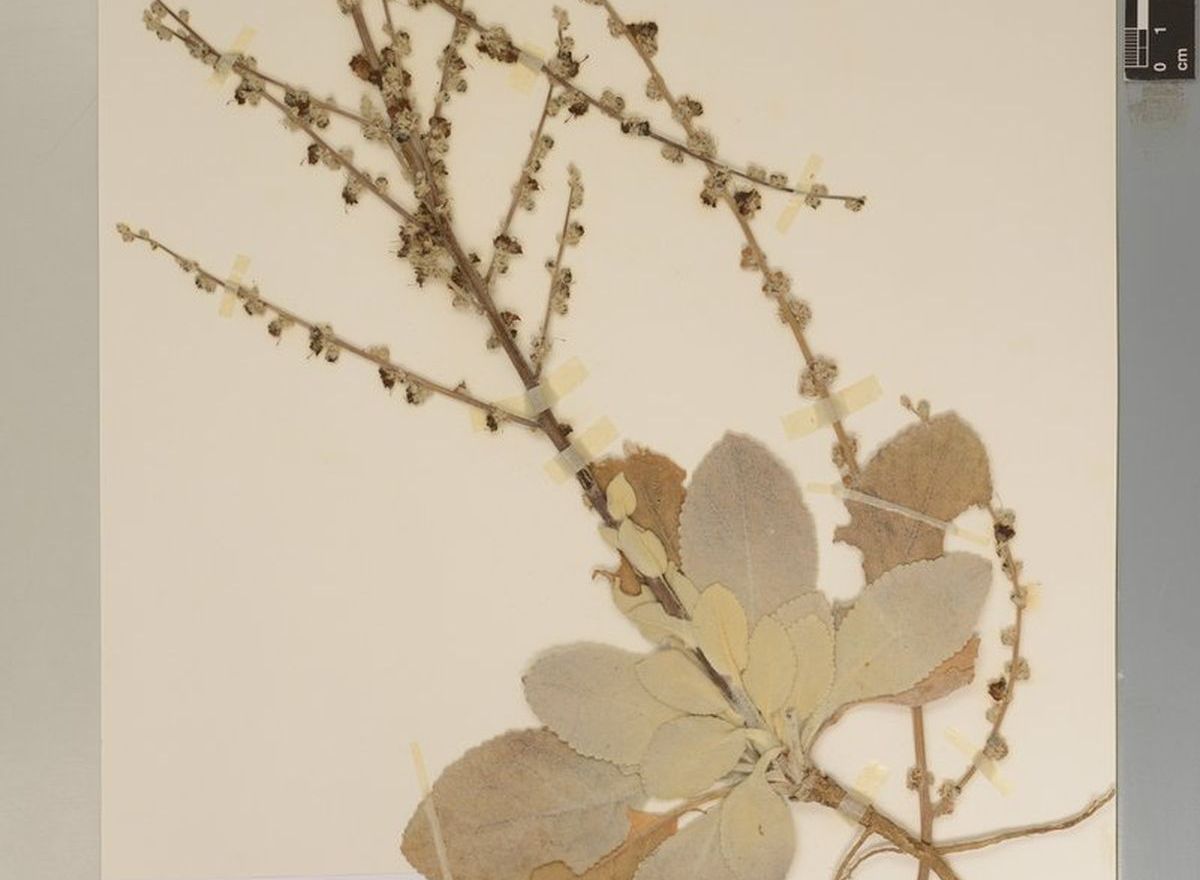
On 3 September 1910 Nábělek was in the Cilo mountains near Colemêrg (Hakkâri), which his labels spell "Djelo-Dagh" near "Djulamerik", at the summer tents of Djezra[4][9]. There, at 2,700 to 2,900 metres, he collected the same beakless dandelion in snow hollows and alpine pastures, on black limestone soil, where it grew in "mat-like patches", as his field slip says[4][9]. These sheets, scanned and openly shared by the Bratislava herbarium, are the plant's record from Colemêrg[9].
Tracing Nábělek's places today is not easy. The curators of his collection write of "the considerable problems of recording and transliterating place-names", made worse by the "ethnic cleansing" of indigenous place names and "their replacement by made-up modern names in the national languages". One of his villages, Hasitha, they note, is a Kurdish place name that modern maps have replaced with a Turkish one[10].
Two Kurdish dandelions
As if one renaming were not enough, in 1937 the botanist G. E. Haglund also named a Taraxacum kurdicum, for a different plant[5]. Handel-Mazzetti's name was older, so Haglund's had to go too, and in 1960 the botanist J. L. van Soest renamed Haglund's plant Taraxacum neokurdicum, "the new Kurdish dandelion"[5][11].
A sheet at Kew shows how hard these little mountain dandelions are to tell apart. E. R. Guest collected three plants on Helgurd at 11,000 feet (about 3,350 m) on 22 July 1932. His "Flora of 'Iraq" label hesitates: "Taraxacum aff. Stevenii", with "aff. kurdicum Hd.-Mzz." added in pencil. In 1965 van Soest identified them as his T. neokurdicum. Later they were identified as T. kurdicum itself, and that is how the Flora of Iraq cites this very sheet[11][1].
Van Soest went further. In 1968 he decided that the beakless fruit was not enough to keep the species apart: the beak of T. crepidiforme (the name now used for T. stevenii) varies "from 3 to practically 0 mm, the latter case typical of T. kurdicum, which in other characters falls within the variability of T. crepidiforme". He made it a subspecies, T. crepidiforme subsp. kurdicum[3]. The Flora of Iraq (2019) and Kew's checklist both treat it as a species again[1][12]. So, a century after Handel-Mazzetti's surprise, the paradox is still being argued over.
What to look for
Handel-Mazzetti's description, with the Flora of Iraq's additions[2][1]:
- a small plant, only 3–12 cm tall, the top of the root covered in the scaly remains of old leaves;
- a thick root, simple or with a few short branches;
- leaves somewhat fleshy, bright green, shiny and completely hairless, narrow to broadly lance-shaped, 5–15 mm wide, untoothed or with a few distant, narrow teeth or wavy edges, with a pale stalk;
- flower stalks one to many, about as long as the leaves;
- flower heads 13–20 mm long and as wide when open, with many yellow flowers;
- blackish-green bracts around the head, the outer ones pressed close, broad and oval, with a broad white or faintly reddish papery margin, and usually without the little horns many dandelions have;
- dark style branches, and pollen present;
- fruits large, about 6.5 mm, slender and spindle-shaped, pale lead-grey (Handel-Mazzetti) or straw-coloured (Flora of Iraq), without a beak (at most a short tip, up to 2 mm), crowned by a sparse white parachute about 5 mm long.
The Flora of Iraq key comes down to one line: a dandelion whose fruits lack a beak and whose parachute is white is T. kurdicum[1].
Where it grows
Kew's checklist gives its native range as Turkey to Iran[12]. In Kurdish terms the known places are all high mountains of Bakur and Başûr:
- Bakur: Mount Meleto in Sasûn, 2,700–3,100 m, by snowmelt and on damp rocks on limestone, August 1910[2]; the Cilo mountains near Colemêrg, 2,700–2,900 m, snow hollows and alpine pastures, September 1910[4][9].
- Başûr: Helgurd, the highest mountain of Başûr (the Flora of Iraq calls it "the highest mountain in Iraq"), where it has been found only in "damp places in the alpine zone", at about 3,500 m[1]. E. R. Guest collected it there in July 1932[11], and Karl Heinz Rechinger on 10 August 1957, on the western slopes of the summit, on metamorphic schist and serpentine[13].
- The Flora of Iraq and Kew also record it from Iran[1][12]; the sources we read give no Iranian locality.
It flowers and fruits in high summer: July to early September on the specimens, "in August" says the Flora of Iraq[2][1][9][11].
These few sheets are almost all there is. The records we found on GBIF, the global biodiversity database, are all herbarium specimens, a search for its name on iNaturalist leads to T. stevenii, and we found no photograph of a living plant. The Flora of Iraq says plainly that its list of Iraqi dandelions "is certainly incomplete" and that "further gatherings of Taraxacum from Iraq are much to be desired"[1]. Anyone walking the snow hollows of Cilo or Helgurd in August, with a camera and a hand lens, could add to a record that has barely grown since 1957.
Names
Taraxacum itself may come from the Persian talkh chakok, "bitter herb", though the Flora of Iraq also mentions Greek origins[1].
Ehmedê Dirihî's dictionary of Kurdish plant names (2013) has three entries for Taraxacum kurdicum. Under melji it lists vaşê zarancan and xizêmok[14]; under vaşzarancan it lists melji and xizêmoka kurdan[14]; and it has a separate entry vaşê zaracanê kurdan[14]. None of these entries gives a region, so they are dictionary names, not names recorded in a particular place, and xizêmoka kurdan and vaşê zaracanê kurdan look coined from the Latin name. The same words turn up elsewhere in the dictionary for other plants: melji for Asparagus persicus in Çewlîg (Bingöl)[14], vaşzarancan for Tragopogon dubius[14].
For dandelions in general, Dirihî gives vaşê zaracan and vaş zaracûn, both from Çewlîg, with sixteen other names[14]. These are genus names, still to be checked, not names for this species.
Sources
- 1.Ghazanfar, S.A., Edmondson, J.R. & Hind, D.J.N. (eds) (2019). Flora of Iraq, Volume 6: Compositae. Royal Botanic Gardens, Kew. ISBN 978-1-84246-685-8.
- 2.Handel-Mazzetti, H. von (1913). Pteridophyta und Anthophyta aus Mesopotamien und Kurdistan sowie Syrien und Prinkipo. III. Annalen des k. k. Naturhistorischen Hofmuseums Wien 27: 391–459.
- 3.abvan Soest, J. L. (1968). New Taraxacum species and forms from Turkey. Acta Botanica Neerlandica 17(6): 483–495, p. 487.
- 4.Nábělek, F. (1925). Iter Turcico-Persicum. Pars II. Plantarum collectarum enumeratio (Compositae). Publications de la Faculté des Sciences de l'Université Masaryk 52. Brno.
- 5.International Plant Names Index. Royal Botanic Gardens, Kew, Harvard University Herbaria and Australian National Herbarium.
- abcdeTaraxacum kurdicum Hand.-Mazz. ex Nábělek; T. paradoxum Hand.-Mazz.; T. paradoxum Palmgr.; T. kurdicum G.E.Haglund; T. neokurdicum Soest; T. crepidiforme subsp. kurdicum (Hand.-Mazz. ex Nábělek) Soest.
- urn:lsid:ipni.org:names:253702-1. ipni.orghttps://www.ipni.org/n/253702-1accessed 14 November 2026
- 6.abcdeHerbarium WU, University of Vienna: isotypes of Taraxacum paradoxum, WU 0044318 and WU 0044319 (via GBIF).
- 7.↩Herbarium B, Botanic Garden and Botanical Museum Berlin: B 10 0097043 (via GBIF).
- 8.↩ETH Zürich herbaria (Z+ZT), specimen ZT-00076041, Palmgren 107 (via GBIF).
- 9.abcdefHerbarium SAV, Institute of Botany, Slovak Academy of Sciences: Nábělek 3760, SAV0004227, SAV0004228, SAV0004229 (via GBIF).
- 10.Kempa, M., Edmondson, J., Lack, H. W., Smatanová, J. & Marhold, K. (2016). František Nábělek's Iter Turcico-Persicum 1909–1910 – database and digitized herbarium collection. PhytoKeys 75: 69–79. doi:10.3897/phytokeys.75.9780https://doi.org/10.3897/phytokeys.75.9780
- 11.abcdRoyal Botanic Gardens, Kew – Herbarium Specimens. via GBIF, herbarium specimen K002697066 (via GBIF). gbif.orghttps://www.gbif.org/dataset/cd6e21c8-9e8a-493a-8a76-fbf7862069e5
- 12.Plants of the World Online. Royal Botanic Gardens, Kew.
- abcTaraxacum kurdicum.
- plant_name_id 3060908. powo.science.kew.orghttps://powo.science.kew.org/taxon/urn:lsid:ipni.org:names:253702-1accessed 14 November 2026
- 13.↩Naturalis Biodiversity Center (L), specimen L 0650167, Rechinger 11457 (via GBIF).
- 14.Ahmet Kasımoğlu (Ehmedê Dirihî) (2013). Ferhenga Navên Nebatan a Kurdî (Dictionary of Kurdish Plant Names). Mardin Artuklu University, Institute of Living Languages in Turkey (ISBN 978-605-4202-12-6).
- GBIF.org GBIF Backbone Taxonomy and occurrence records.
- occurrence 1831366204 (SAV0004227). api.gbif.orghttps://api.gbif.org/v1/occurrence/1831366204accessed 14 November 2026
- occurrences 1831366204, 1831366099, 1831366157. api.gbif.orghttps://api.gbif.org/v1/occurrence/1831366204accessed 14 November 2026
Last updated 20 November 2026