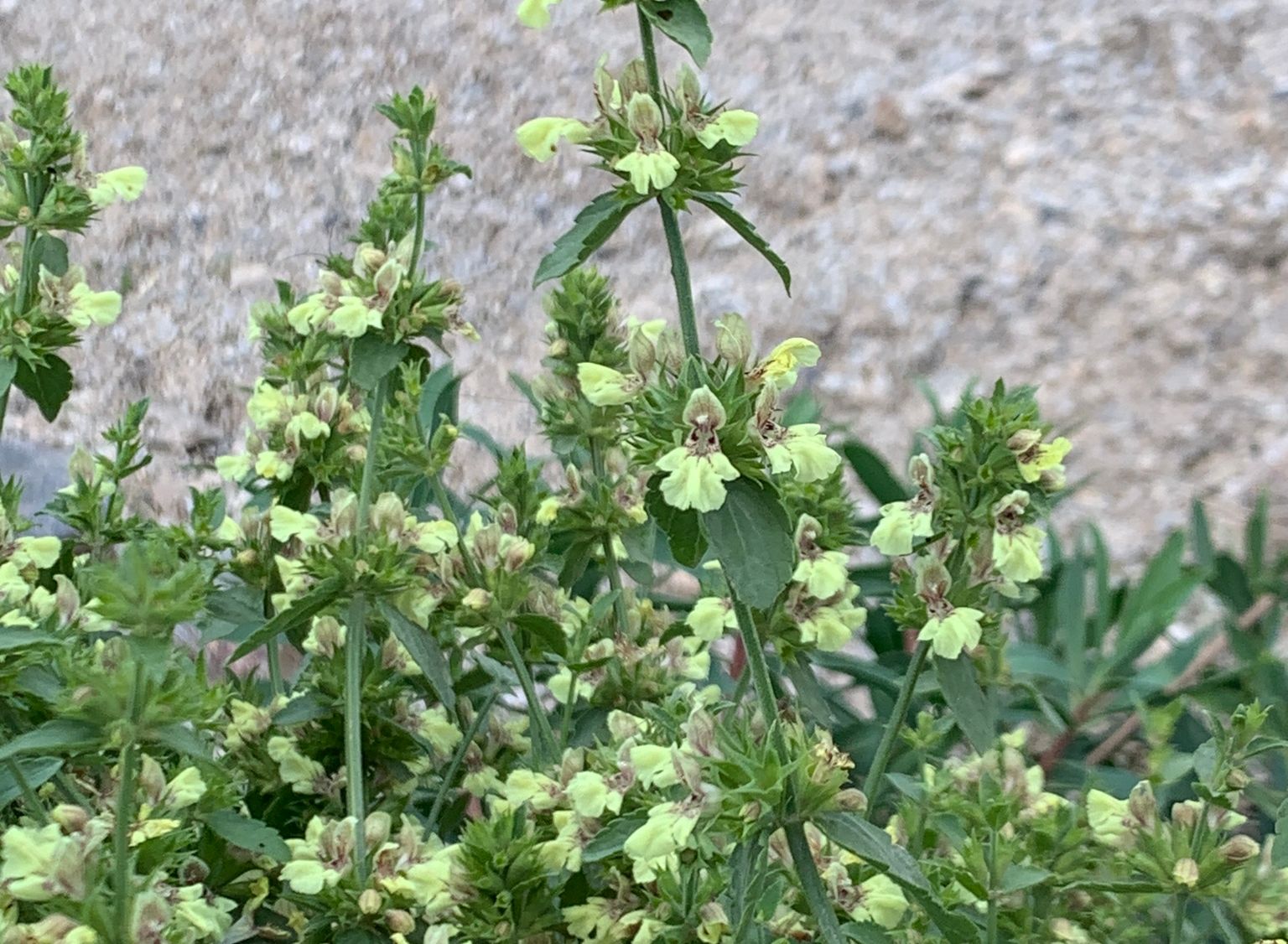
Silene kurdistanica is a campion, a member of the pink and carnation family (Caryophyllaceae), that was named only in 2023[1][2]. It is known from a humid meadow at about 1,800 m between Dîwandere (Divandarreh) and Bîcar (Bijar) in East Kurdistan (Rojhilat)[1][2]. Its pinkish-lilac petals are one of the two things that set it apart from its closest relative, a pale-flowered campion of the mountains further north[1]. Its describers know it only from that one place, where they gathered it on a spring day in 2016[1][2].
How it got its name
- Named by
- Maroofi & Attar, 2023Published in Ann. Bot. Fenn. 60: 127
- Type collected by
- Attar & Maarofi22 May 2016
A spring day near Najafabad
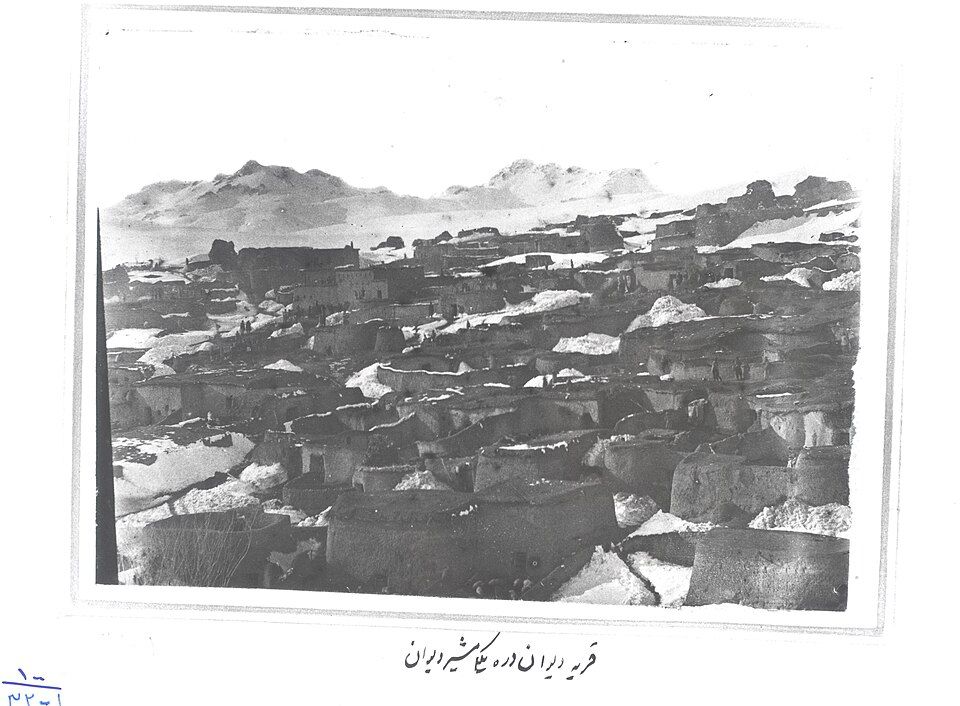
On 22 May 2016 the botanists Farideh Attar and Hossein Maroofi stopped on the road between Dîwandere and Bîcar, about 2 km along the turning towards the village of Najafabad, at 1,800 m[2]. There, in a humid meadow, they gathered the campion that would become a new species[1][2].
One of their sheets became the holotype, the single specimen to which the name is tied for good. It is kept in the Central Herbarium of the University of Tehran under number TUH 46589, where Attar works[1][2]. A duplicate, the isotype, carries the herbarium code HKS and the number 13180[2].
Seven years later the two published the plant in Annales Botanici Fennici, a botanical journal from Helsinki[2], in a four-page paper whose title names the place, Kurdistan[1]. The International Plant Names Index records the reason for the name in the paper's own words: it "is derived from Kurdistan, where this species was found"[1][2].
Pinkish-lilac, not white
Attar and Maroofi placed their plant in section Auriculatae of the genus Silene[1]. Its closest relative, they found, is Silene cephalantha[1]. The two differ in two things a careful observer can check in the field[1]:
- the petals: pinkish-lilac in S. kurdistanica; in S. cephalantha white on the upper surface and yellowish green beneath;
- the anthophore, the short stalk inside the tube-shaped calyx on which the petals, stamens and ovary sit: in S. kurdistanica 2 to 3.5 mm long and hairless; in S. cephalantha 4 to 6 mm long and densely covered in fine hairs.
They also compared it with S. bayburtensis, another campion with purplish-pink petals, which has a shorter calyx (6 to 9 mm)[1].
What it looks like
Attar and Maroofi describe the plant like this[1]:
- a perennial with a creeping, runner-forming base and underground stems, sending up non-flowering shoots as well as flowering ones;
- many stems, bright green, upright or rising from a curved base, 20 to 42 cm tall and densely leafy in their lower third, covered in short hairs that point downwards, more densely towards the top;
- narrow leaves, those on the stem 16 to 45 mm long and 3 to 11 mm wide, hairless on both faces but rough along the edges;
- flowers crowded in head-like clusters of up to 15, three to five on each branch, on stalks only 1 to 4 mm long;
- a calyx 9 to 11 mm long, purple or sometimes greenish below and densely covered in fine hairs, between tube- and bell-shaped at flowering and cup-shaped in fruit;
- petals pinkish-lilac, turning purple when dried, each blade split at the tip for less than half its length, with small blunt scales, about 1 mm long, at the throat;
- a capsule 7 to 10 mm long, holding brown or black, roughly kidney-shaped seeds about 1 mm long.
It flowers in May and June and fruits in June and July[1]. Among their reasons for placing it in section Auriculatae, Attar and Maroofi list that it is perennial and gynodioecious, a term for plants of which some carry only female flowers and others flowers of both sexes[1].
A head of flowers on Paltokan
The relative has a much older story. In 1867 the botanist Edmond Boissier described Silene cephalantha in his Flora Orientalis, from a specimen that Theodor Kotschy had collected on Paltokan (Palandöken), the mountain above Erzîrom (Erzurum), which Boissier spells "Palanteuken"[3].
His Latin description explains the name. The plant has many stems, about half a foot tall, and at their tips three to twelve flowers sit almost without stalks, "crowded into a head"[3]. Cephalantha means "head-flowered". Boissier also noted petal blades with two lobes, and small flowers that he took to be of separate sexes on separate plants[3].
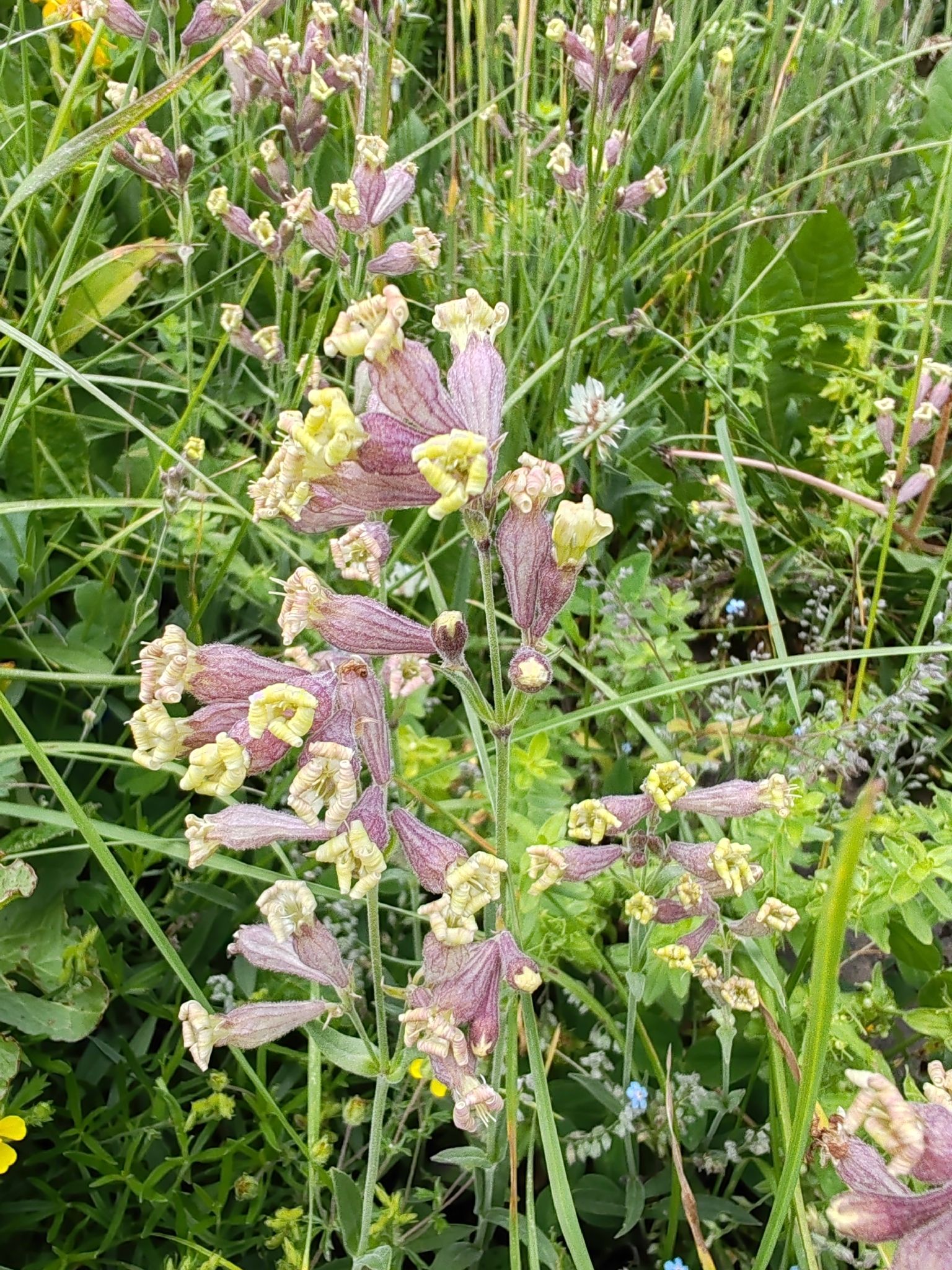
Today Kew's checklist gives S. cephalantha a range from eastern Turkey to the Caucasus and north-western Iran[4]. Its Kurdish cousin, with lilac flowers, lives further south.
A botanist who maps Rojhilat in plant names
Silene kurdistanica is one name in a long series. Since 2002 Hossein Maroofi, of the Faculty of Agriculture of the University of Kurdistan in Sine (Sanandaj), has been an author of 29 plant names, according to the International Plant Names Index[1][2][2]. Twenty-six of them have their type in the province of Kurdistan, and eleven carry Kurdistan or the Kurds in the name[2].
The earliest in the index is a crocus from the slopes of Panjah-Ali mountain near Qurwe (Qorveh), named kurdistanicus in 2002 and now treated as a species of its own, Crocus kurdistanicus[2]. Some of the others come from the very hills around the Silene's meadow. Three new milk-vetches (Astragalus) were named from near Bîcar between 2005 and 2013, and in 2007 a grape hyacinth, Muscari kurdicum, from the road between Dîwandere and Seqiz (Saqqez), at 2,100 m[2]. In the same 2023 volume of Annales Botanici Fennici that carries the Silene, Maroofi and a colleague named a new star-of-Bethlehem (Ornithogalum), O. marivanense, from near Merîwan (Marivan)[2].
Across the border in South Kurdistan (Başûr), new campions are still being found: in 2017 S. A. Ahmad described Silene shehbazii, "a new species from Kurdistan, Iraq", as the title of his paper puts it[5].
Where it grows
Kew's checklist gives its native range as north-western Iran[4]. In Kurdish terms that is a single place in Rojhilat: a humid meadow at about 1,800 m between Dîwandere and Bîcar, the only place its describers know it from[1][2]. There are no records of it in the Global Biodiversity Information Facility (GBIF) and no observations on iNaturalist[6]. Anyone walking the meadows along that road in May or June, when it flowers[1], looking for a lilac campion with a short, hairless stalk inside its flowers, may be the next to see it.
Conservation
With so little known about it, Attar and Maroofi suggest that for now it be classed as Data Deficient (DD) under the IUCN criteria[1].
Its name in Kurdish
No Kurdish name has been recorded for this species. For the genus Silene as a whole, Ehmedê Dirihî's dictionary of Kurdish plant names gives mêşgir, mêşmij, mêşxur, giyamêşgir, giyamêşmij and giyamêşxur, along with areqvaş, bûkêgûr, siyabu, şekirok, taro berxik and xatûnek[7]. Several of the same names appear in the dictionary for the Venus flytrap, and its Turkish column calls both plants sinekkapan, "fly-catcher"; in English, too, many Silene species are called catchflies. These are genus names, still to be checked, not names for this particular plant.
Sources
- 1.abcdefghijklmnopqrsMaroofi, H. & Attar, F. (2023). Silene kurdistanica (Caryophyllaceae, sect. Auriculatae) a new species from Kurdistan, western Iran. Annales Botanici Fennici 60(1): 127–130. doi:10.5735/085.060.0120https://doi.org/10.5735/085.060.0120
- 2.International Plant Names Index. Royal Botanic Gardens, Kew, Harvard University Herbaria and Australian National Herbarium.
- 3.abcBoissier, E. (1867). Flora Orientalis, vol. 1. Basel & Geneva: H. Georg, 1: 613. archive.orghttps://archive.org/details/floraorientaliss01bois
- 4.Plants of the World Online. Royal Botanic Gardens, Kew.
- aSilene cephalantha Boiss.
- bSilene kurdistanica.
- plant_name_id 3308831. powo.science.kew.orghttps://powo.science.kew.org/taxon/urn:lsid:ipni.org:names:77323735-1accessed 14 November 2026
- 5.↩Ahmad, S. A. (2017). Silene shehbazii (Caryophyllaceae), a new species from Kurdistan, Iraq. Novon 25(2): 131–133. doi:10.3417/2016009https://doi.org/10.3417/2016009
- 6.↩Global Biodiversity Information Facility (GBIF) and iNaturalist, searched 15 November 2026.
- 7.↩Ahmet Kasımoğlu (Ehmedê Dirihî) (2013). Ferhenga Navên Nebatan a Kurdî (Dictionary of Kurdish Plant Names). Mardin Artuklu University, Institute of Living Languages in Turkey (ISBN 978-605-4202-12-6), pp. 284, 546; pp. 284, 546.
- 8.Ehmedê Dirihî (2007). Flora Kurdistanê (II). institutkurde.orghttps://www.institutkurde.org/publications/kurmanci/
Last updated 20 November 2026